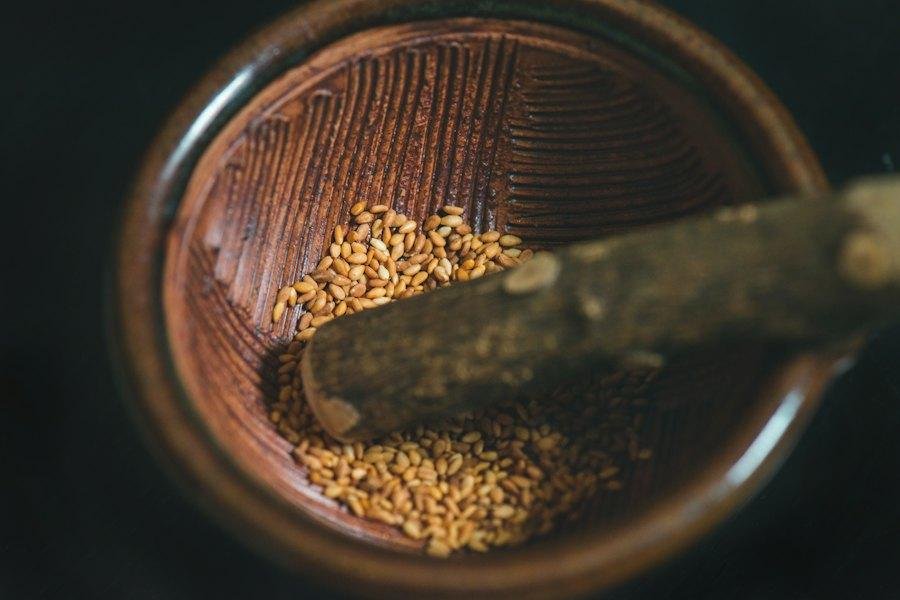
Sesame is an important oilseed, but it needs care at harvest because the capsules ripen unevenly and split easily, letting the seed fall out.
When to harvest
Harvest when the lower leaves turn yellow and drop and the lowest capsules turn yellow-brown. Harvesting too late means capsules split and seed is lost in the field. Harvesting too early gives immature seed.
After cutting
- Cut the stalks and tie them in small bundles.
- Stand the bundles upright in the field so they dry and the capsules open gradually.
- Shake the bundles over a clean sheet or tarpaulin to collect the seed.
Drying and storage
Dry the seed well, to a low moisture level (about 6%), before storing it. Moisture causes mould, raises free fatty acids and lowers quality. Store in a clean, dry, well-ventilated place, off the floor and away from walls.
Jute bags suit sesame for storage and transport because the fibre lets air through and stands up to handling. Contact us for questions about our jute sacks.
Common mistakes
- Harvesting after the capsules have already split, so seed is lost in the field.
- Drying bundles on bare ground, which mixes dirt and grit into the seed.
- Mixing seed of different moisture levels in the same bag.
- Storing before the seed is fully dry.
Make cleaning part of the routine: remove straw, dirt and damaged seed before bagging. Clean seed reaches a higher grade and a better price.
Have a question, or need agricultural advice?
Contact us