Not all water is equally suitable for irrigation. Water quality affects plant growth, soil health and the life of the irrigation system.
What to test in irrigation water
- Salinity (EC): excess salts make it hard for roots to take up water, so growth suffers.
- Sodium: damages soil structure and slows water infiltration.
- pH and bicarbonate: affect nutrient availability and can cause deposits.
- Iron and suspended solids: block emitters and filters.
Common effects
Burnt leaf tips, stunted growth, lower yield and salt build-up on the soil surface, as well as clogged drip emitters.
What to do
1. Have a sample of your irrigation water tested in a laboratory.
2. Choose salt-tolerant crops if the water is saline.
3. Leach the soil from time to time with extra water to move salts out of the root zone, and make sure drainage works.
4. Use suitable filters and keep the system well maintained.
We offer soil and water analysis to set the best plan. Contact us.
Warning signs in the field
- Burnt or dry leaf tips even though irrigation is enough.
- A white crust of salt on the soil surface.
- Patches of weak growth in the same field.
Managing irrigation with salinity
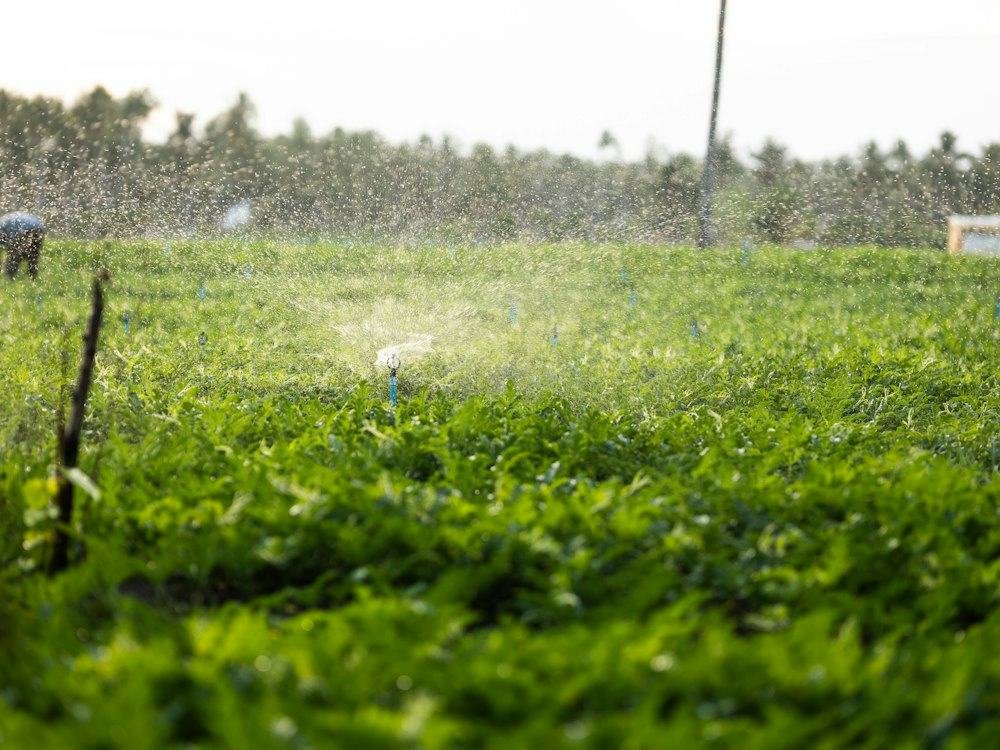
Light, frequent drip irrigation keeps moisture high near the roots and pushes salts away from them. Mixing two sources (saline and fresh) dilutes the concentration. Good drainage cannot be skipped, because without it the salts return to the root zone.
Have a question, or need agricultural advice?
Contact us