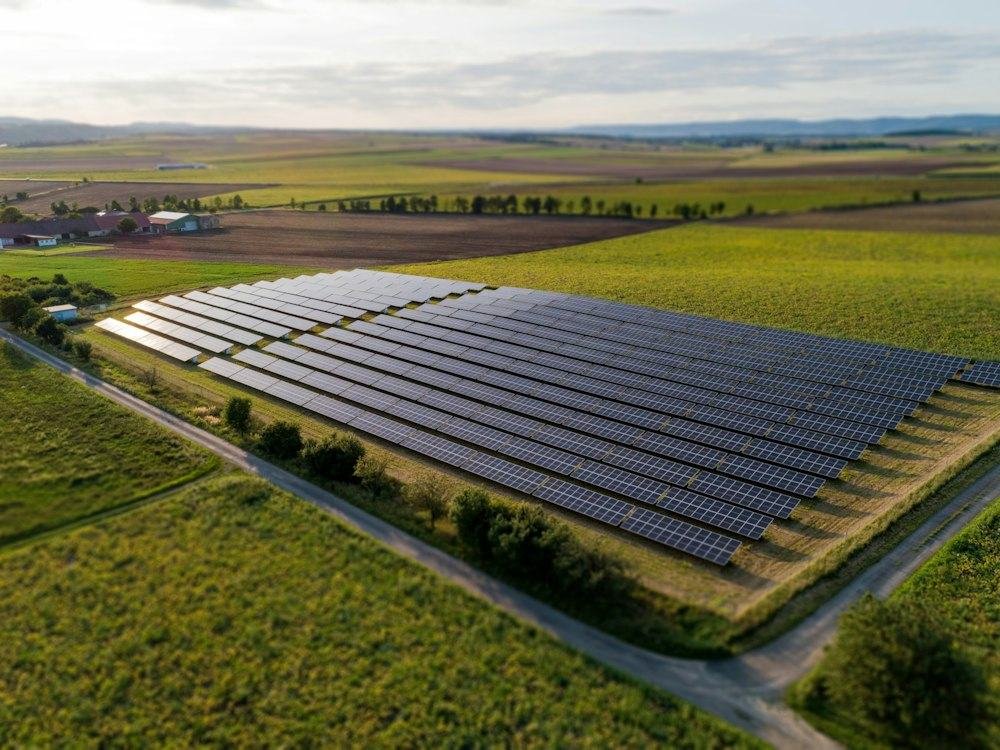
Many farms rely on diesel pumps and carry the cost of fuel and maintenance and the difficulty of supply. Solar pumping is an alternative that cuts these costs, especially for farms far from the power grid.
The parts of a system
- Solar panels that generate electricity.
- A controller that manages operation.
- A suitable pump (often submersible for wells).
- A tank to collect water and release it when needed.
Advantages
- No fuel, so running costs are low.
- Less maintenance than diesel engines.
- It works in daylight, which is usually when plants need water.
- Quieter, with lower emissions.
What to consider
1. Well depth and the daily water need, which set the system size.
2. The up-front cost is higher, but it is usually recovered through fuel savings.
3. A tank is needed to store water for cloudy days.
4. Panels need cleaning and protection from theft and tampering.
We can help you estimate the right system for your farm. Contact us.
How is the system sized?
It depends on the daily water needed, how far the water must be lifted (the total head) and the hours of sun available. Ask a specialist to calculate it from your farm's data instead of guessing.
Tips
- Place the panels in an unshaded spot at a suitable angle.
- Clean off dust regularly, because dust cuts output.
- Think about fencing the site and protecting it from theft.
- Keep a back-up plan for long cloudy spells, such as a large tank.
Have a question, or need agricultural advice?
Contact us