Palm kernel meal is a feed ingredient made from the kernel of the oil palm fruit. It goes by three names, palm kernel meal, palm kernel expeller (PKE) and palm kernel cake (PKC), and all three mean the pressed meal left after the oil is taken out.
From fruit to meal
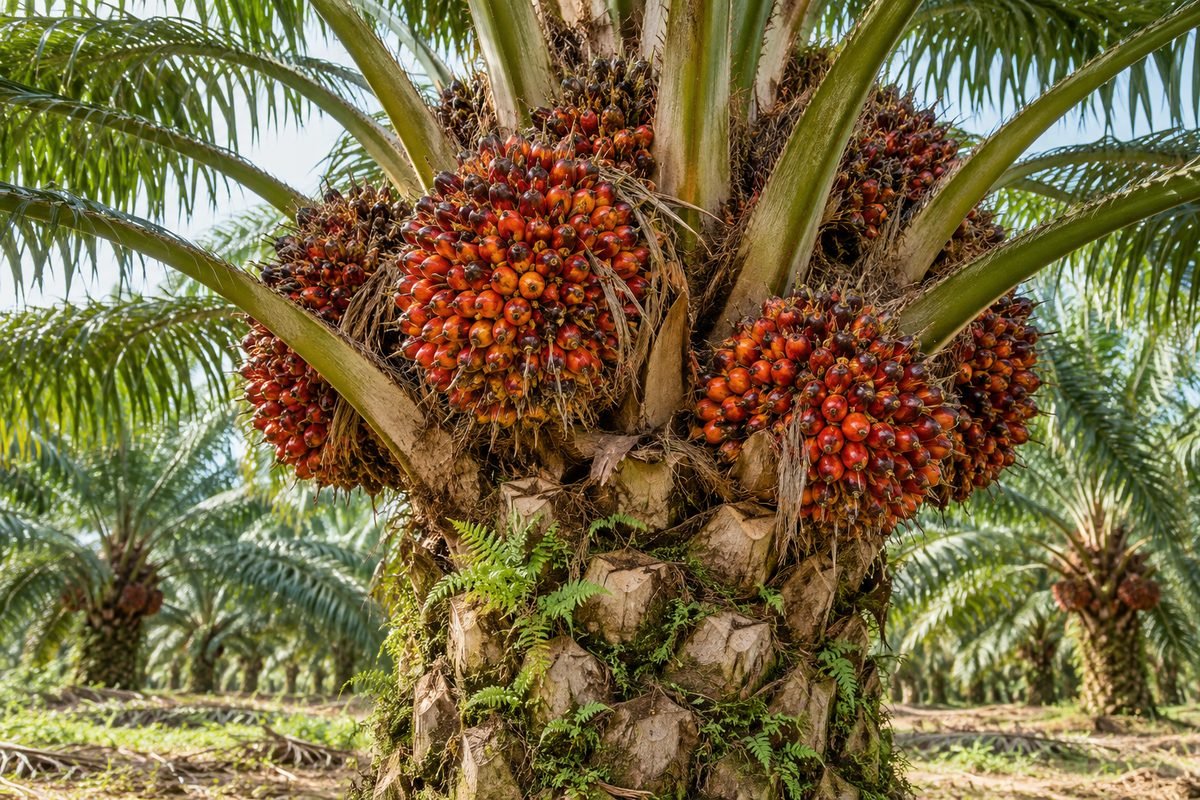
The palm fruit has oily flesh around a hard nut. The flesh gives palm oil. The nut is cracked, and the kernel inside is cleaned, crushed and pressed. The pressing removes most of the oil, and the pressed cake is ground into a coarse brown meal.
What it brings to a ration
A typical pressed meal carries 16 to 18% crude protein, 6 to 8% fat and 17 to 20% fibre. That makes it a fibre- and energy-rich feed with a modest protein content, and a protein that breaks down slowly in the rumen. It is well accepted by cattle, sheep and goats and is also used in smaller shares for poultry, fish and rabbits.
What it does not do
It is not a straight replacement for soybean meal. Soybean meal has about three times the protein. Palm kernel meal replaces part of the maize and part of the soybean together, which is where the saving in a ration comes from. How much you save depends on what maize and soybean meal cost when you buy.
Have a question, or need agricultural advice?
Contact us