
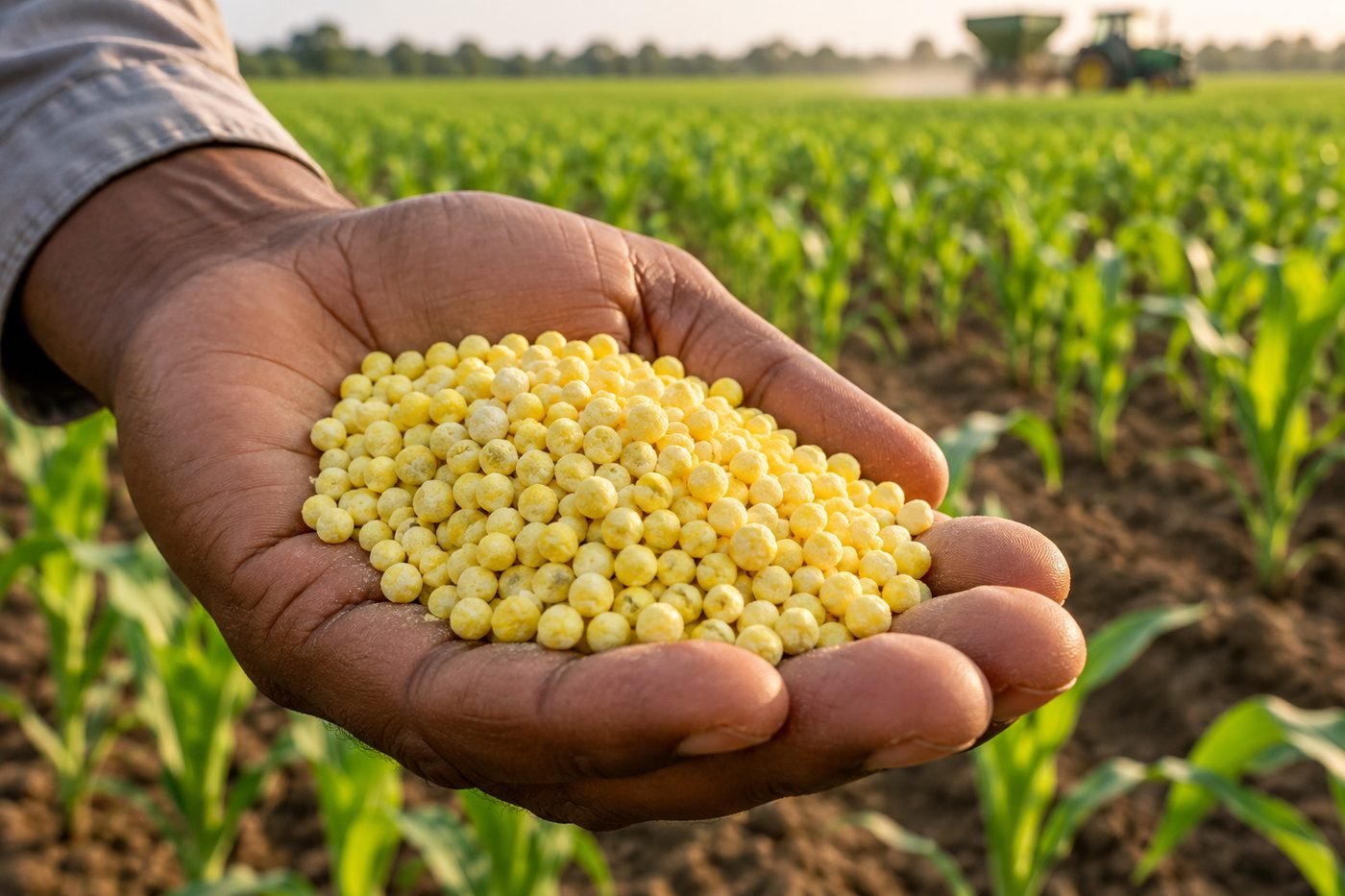
Bentonite sulphur combines about 90% elemental sulphur with bentonite clay. When the granule meets soil moisture the clay swells and breaks it into fine particles, which soil bacteria then oxidise into sulphate, the form plants take up.
Sesame, groundnut and sunflower use a lot of sulphur to make oil and protein, and onions and brassicas need it for flavour and yield. In alkaline, calcareous soils sulphur also lowers the pH around the granule, which frees locked phosphorus and micronutrients.
At a glance
- Sulphur content: about 90% elemental S
- Slow-release: converts to sulphate over weeks
- Needs moisture and warm soil to work
- Helps correct alkaline, calcareous soils
Best for
- Sesame, groundnut and sunflower
- Onion, garlic and brassica vegetables
- Pulses: cowpea, chickpea, mung bean
- Cereals on sulphur-poor soils
- Alkaline and calcareous soils
How to use
- Apply two to four weeks before planting, or at land preparation, so the sulphur has time to convert.
- Mix into the topsoil rather than leaving it on the surface.
- Works best with moisture and warm soil; in dry soil conversion stays slow.
- Use a soil or plant test to confirm sulphur is short before relying on it.
Storage and care
- Keep dry. The bentonite binder swells with moisture.
- Store away from heat sources and flames and keep it separate from nitrate fertilizers.
- Handle with dry hands and wear a dust mask when pouring.
Photos
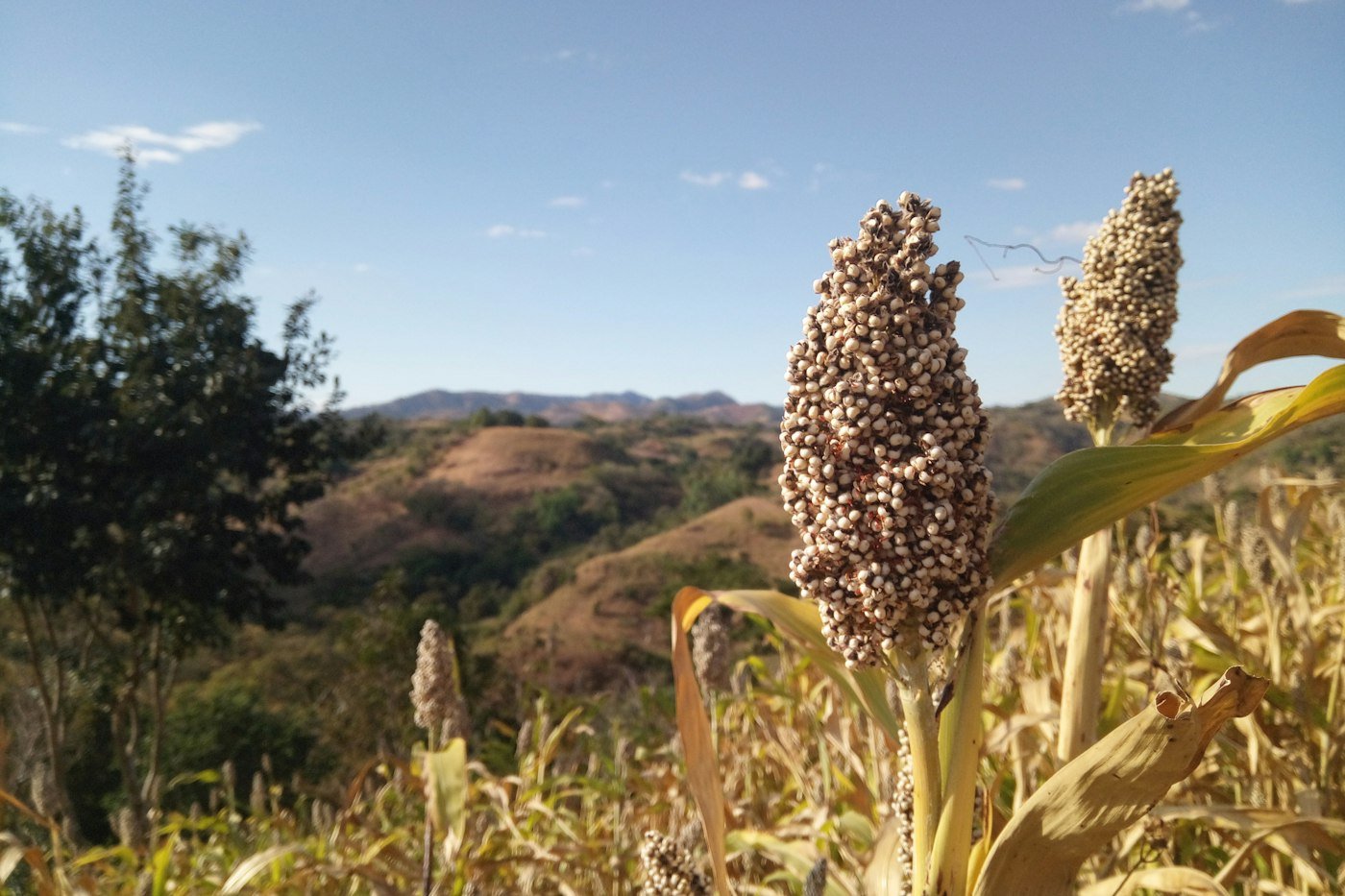
Frequently asked questions
Is this the same as gypsum?
No. Gypsum is calcium sulphate and acts quickly; bentonite sulphur is elemental sulphur and acts slowly but gives far more sulphur per bag.
Will it acidify my field too much?
At normal rates the effect is local and gentle; we advise rates by soil test.
How soon will crops respond?
Allow several weeks for conversion; applying before planting is the key.
More articles
Bentonite sulphur 90: sulphur for oilseeds and alkaline soils
Sulphur is the overlooked fourth nutrient. Here is when bentonite sulphur 90 pays and how to apply it.
Read more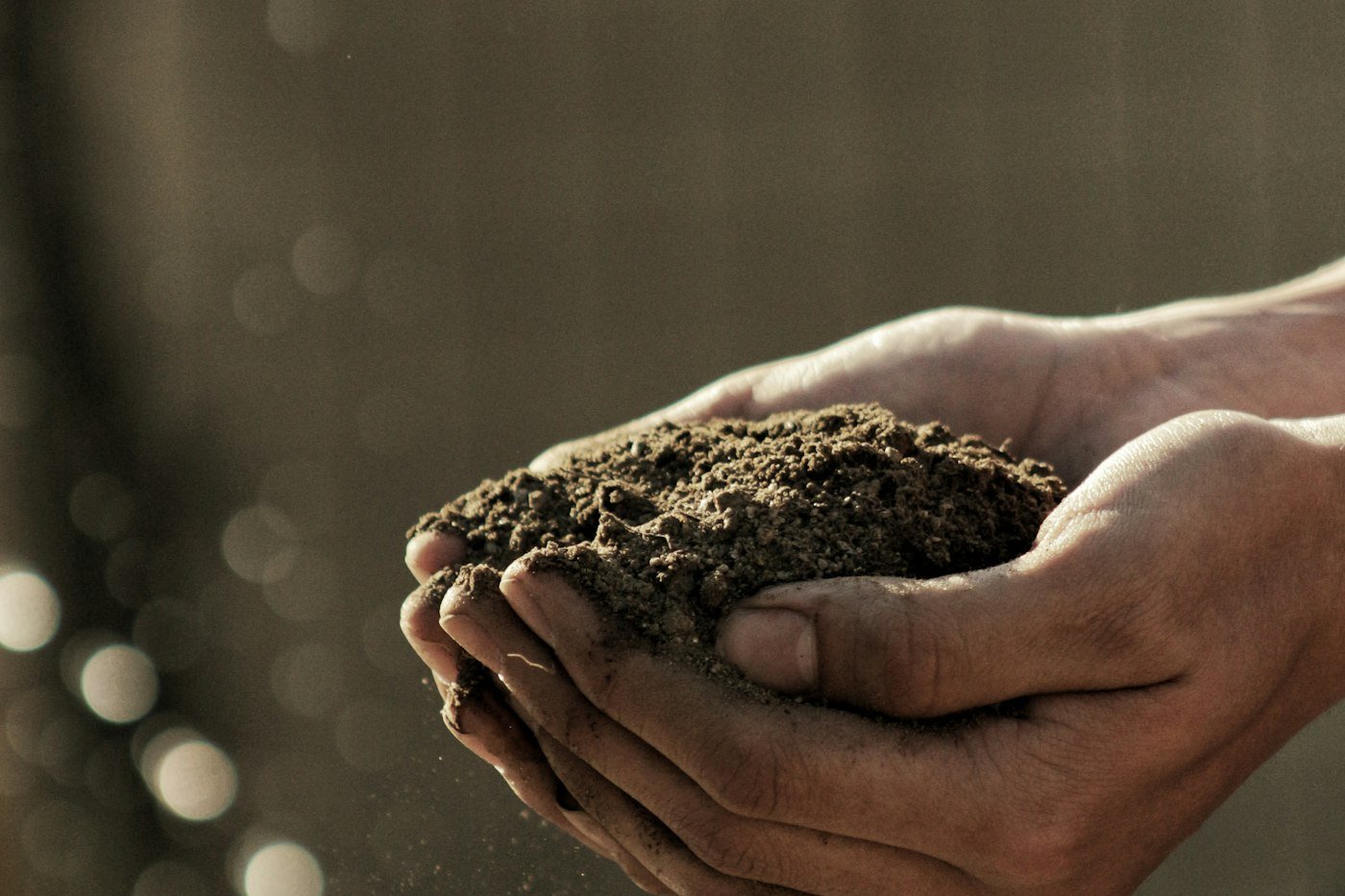
Why test your soil before you fertilize
Guessing fertilizer is the costliest habit in farming. A laboratory test shows what is missing and what you can skip.
Read moreRelated
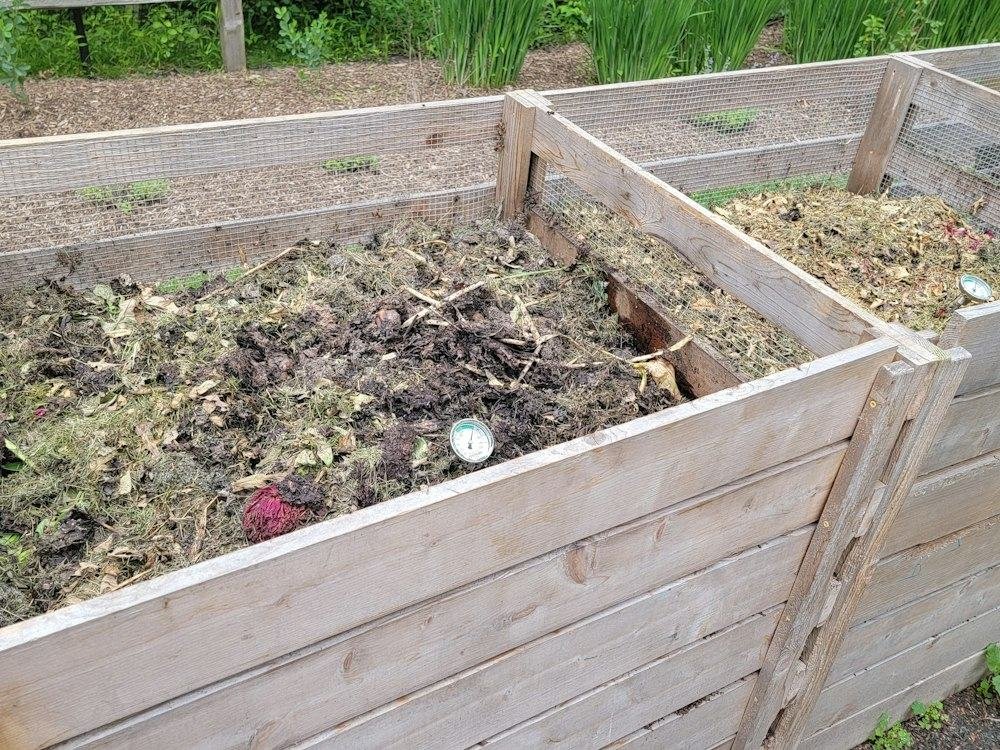
Organic fertilizers
Compost and organic matter that build soil, hold water and feed roots slowly.
View details
Seeds
Adapted, clean seed and advice on varieties that suit your land and season.
View details
Irrigation systems
Drip and sprinkler systems, filters, pipes and pumps designed for your field.
View details