
Palm Kernel Meal (PKE / PKC) Animal Feed
Palm kernel meal is what is left when the oil is pressed from the kernel of the oil palm fruit. It is a fibre- and energy-rich feed ingredient that ruminants accept well, and it lets feed mills and large livestock farms replace part of the maize and soybean meal in a ration.
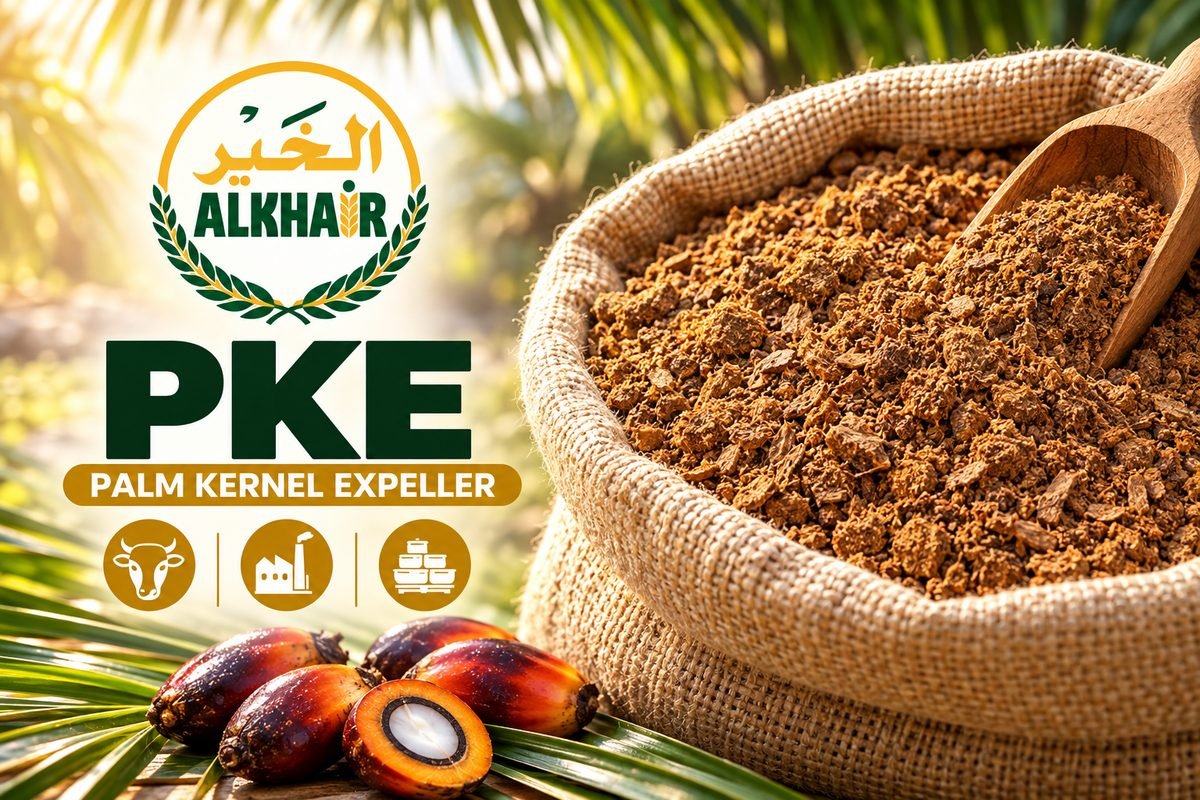
Feed mills and livestock farms know it as palm kernel meal, palm kernel expeller (PKE) or palm kernel cake (PKC). The three names describe the same by-product: the kernel is cleaned, crushed and pressed, the oil goes to food and industry, and the pressed cake is ground into a coarse, brown meal.
It does not replace soybean meal on protein alone. Its value is energy, digestible fibre and a protein that breaks down slowly in the rumen, which is why it suits cattle, sheep and goats best and is used in smaller shares for poultry, fish and rabbits.
At a glance
- Typical crude protein 16 to 18% (higher in dehulled meal)
- Crude fat 6 to 8% in pressed cake, 10% at most
- Crude fibre 17 to 20%
- Moisture 10 to 12% at most, ash 5 to 6% at most
- Total aflatoxin below 20 ppb; free of mould, rancidity, caking, foreign matter and insects
- Packed in bulk in lined 20-foot containers, or in jumbo bags of 1 to 1.5 tonnes
Best for
- Beef cattle and dairy cow rations
- Fattening sheep and goats
- Broiler and layer feed, in smaller shares
- Fish feed: tilapia and catfish
- Rabbit feed
- Feed mills and large livestock farms buying in volume
How to use
- Start at the lower end of the range for the animal (see the table on the animal feed page) and raise the share over one to two weeks.
- Mix it evenly into the ration. The meal is coarse and can separate from fine ingredients if it is mixed badly.
- Balance lysine and methionine, especially for high-yielding cows, poultry and fish: blend with a protein feed such as soybean meal or add synthetic amino acids.
- For sheep, keep the share low and ask a nutritionist about zinc before going above 30%, because sheep are sensitive to copper.
Storage and care
- Keep it dry. Moisture above 12% invites mould and aflatoxin. Store off the floor and away from damp walls.
- Check bulk loads for caking, heat and smell before unloading, and keep a sealed sample of every lot.
- Use older stock first.
- Do not store it next to fertilizer or chemicals.
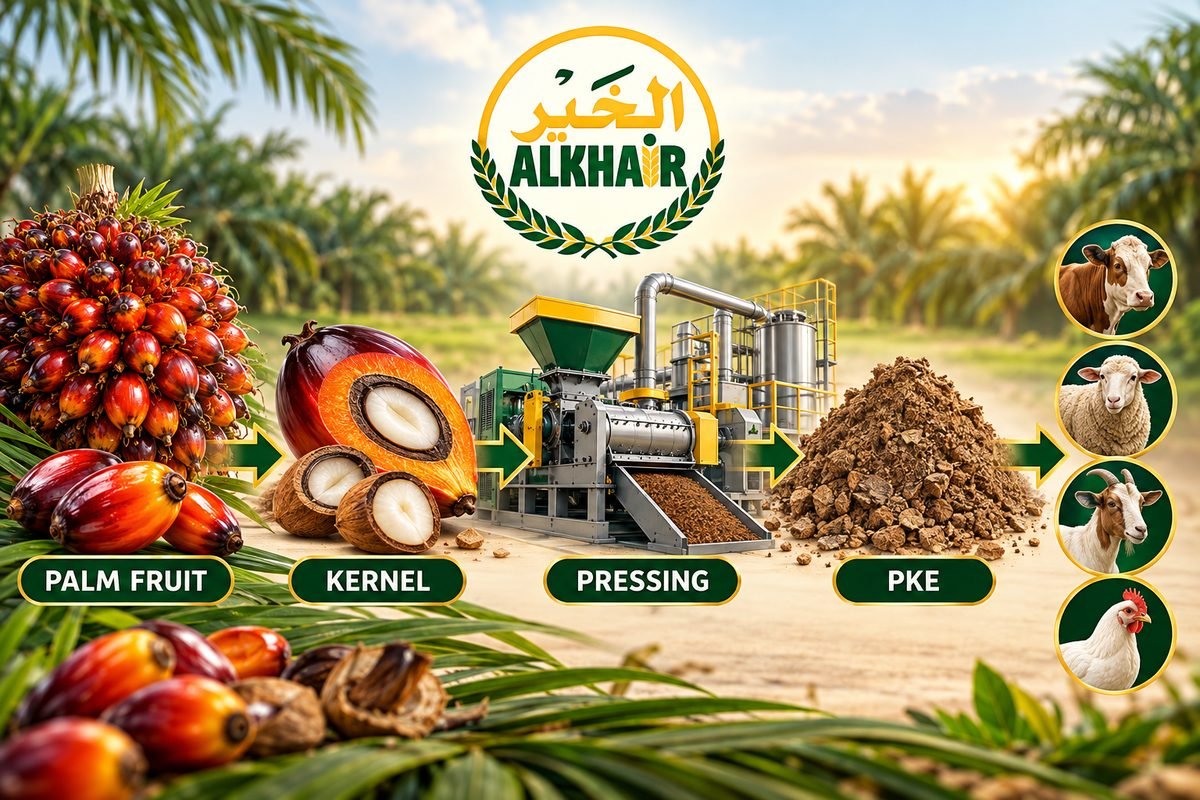
From oil palm fruit to feed meal
The fruit gives palm oil from its flesh and a hard nut with a kernel inside. The kernel is cleaned, crushed and pressed. The oil is taken off and the pressed cake is ground into meal.
Nothing from the kernel is wasted: the oil goes to food and industry, and the meal goes to animals.
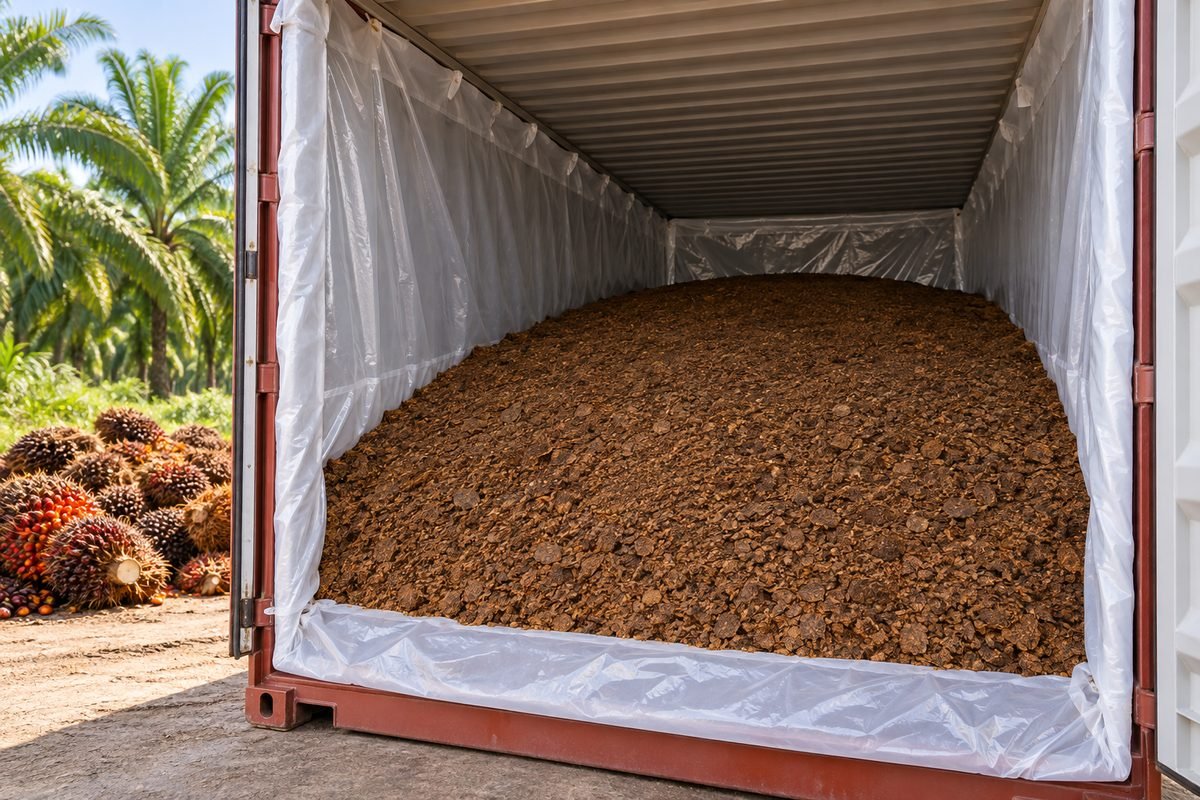
Packed for the way you buy
Large buyers take bulk loads in lined 20-foot containers of about 20 tonnes. Smaller lots can ship in jumbo bags of 1 to 1.5 tonnes.
Tell us your monthly volume and destination and we will tell you what can be shipped and how.
Photos
Frequently asked questions
Are palm kernel meal, PKE and PKC the same thing?
Yes. Palm kernel meal, palm kernel expeller (PKE) and palm kernel cake (PKC) are names for the pressed by-product of oil palm kernels. Our description follows the pressed (expeller) type.
How much can I put in a ration?
Typical shares of the dry matter are 30 to 50% for cattle, 15 to 20% for fattening sheep, 10 to 15% for goats, 10 to 15% for broilers without enzymes, 15 to 20% for layers, 20 to 30% for tilapia and catfish and 20 to 25% for rabbits. Confirm the exact share with your nutritionist.
Why is the protein lower than soybean meal?
Soybean meal is about 44 to 48% protein and palm kernel meal 16 to 18%. Palm kernel meal adds energy and fibre next to the protein, so it replaces part of the maize and soybean in a ration, not all of the soybean.
What about aflatoxin?
The typical commercial specification is total aflatoxin not above 20 ppb, with B1 not above 10 ppb. Ask for the figure for the lot you are buying.
How is it shipped, and how do I ask for a quote?
In bulk in lined 20-foot containers (about 20 tonnes) or in jumbo bags of 1 to 1.5 tonnes. Use the request button on this page and tell us your monthly volume, packing and destination.
More articles
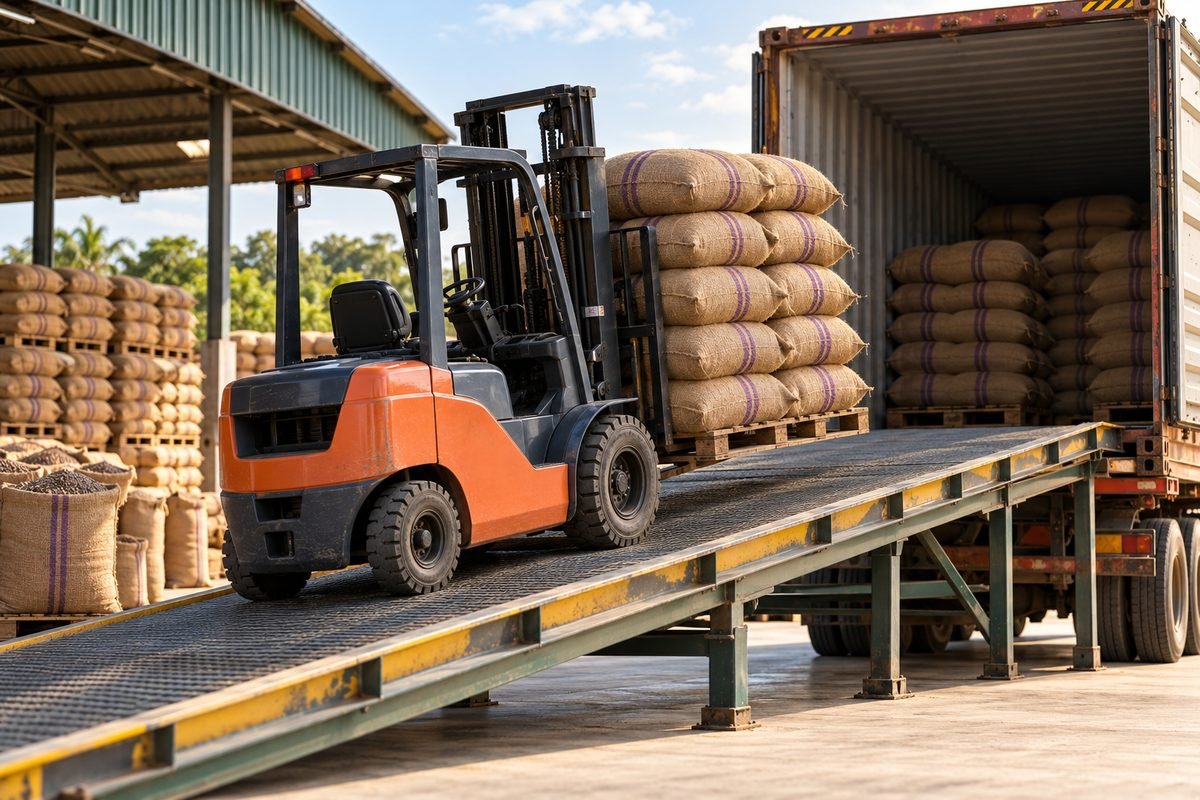
Palm kernel meal in bulk or jumbo bags: loading, moisture and storage
Lined containers or jumbo bags: how each is packed, what to check on arrival and how to keep the meal dry.
Read more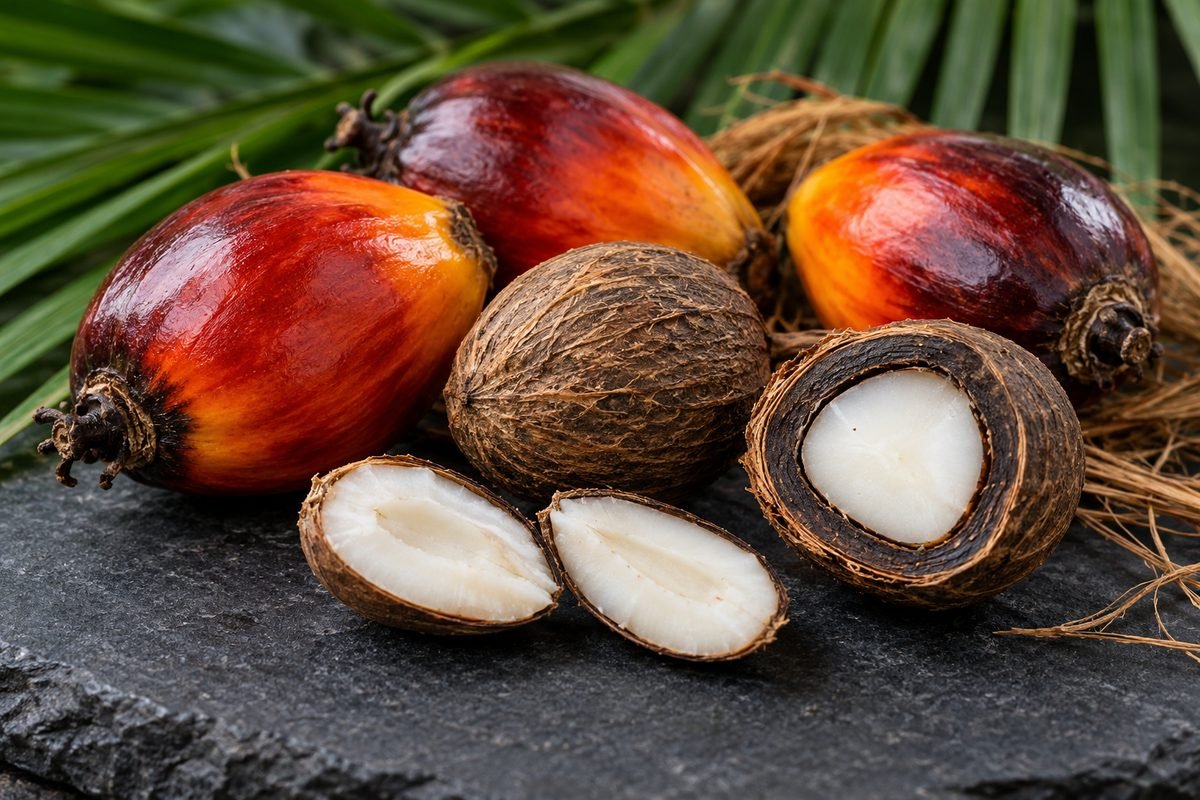
Palm kernel meal specification: what to check before you buy
Protein, fat, fibre, moisture, ash and aflatoxin: the typical figures and the checks that protect a feed mill.
Read more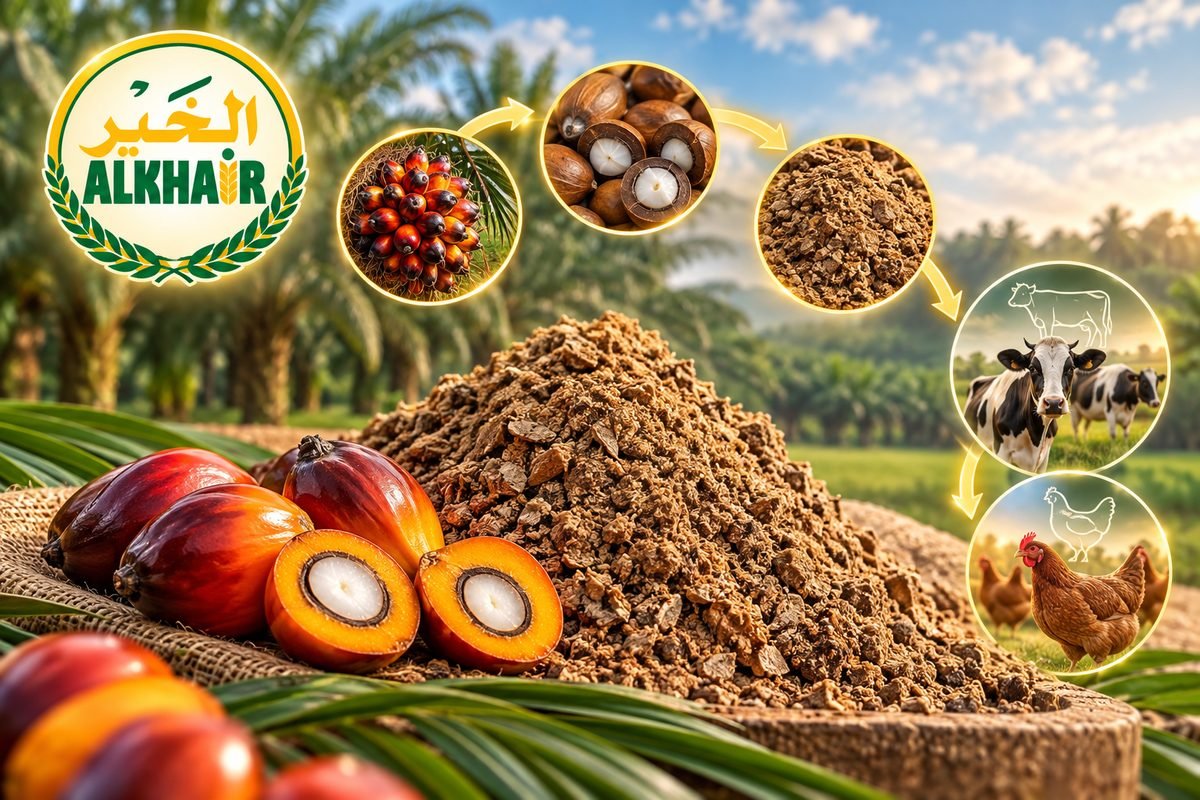
Palm kernel meal in poultry, fish and rabbit feed
Smaller shares for single-stomached animals: typical rates for broilers, layers, tilapia, catfish and rabbits, and why amino acids matter.
Read more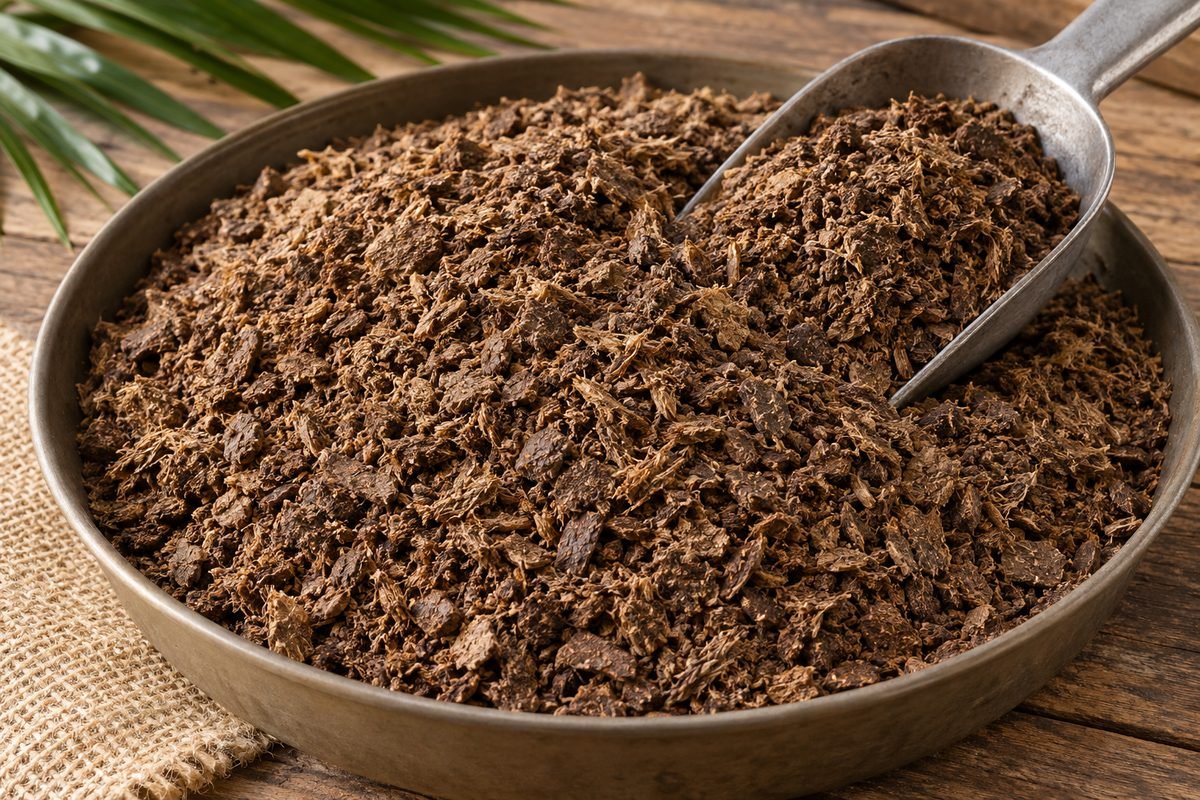
Palm kernel meal for sheep and goats: the copper question
Safe shares for fattening sheep and goats, and why sheep need extra care with copper.
Read more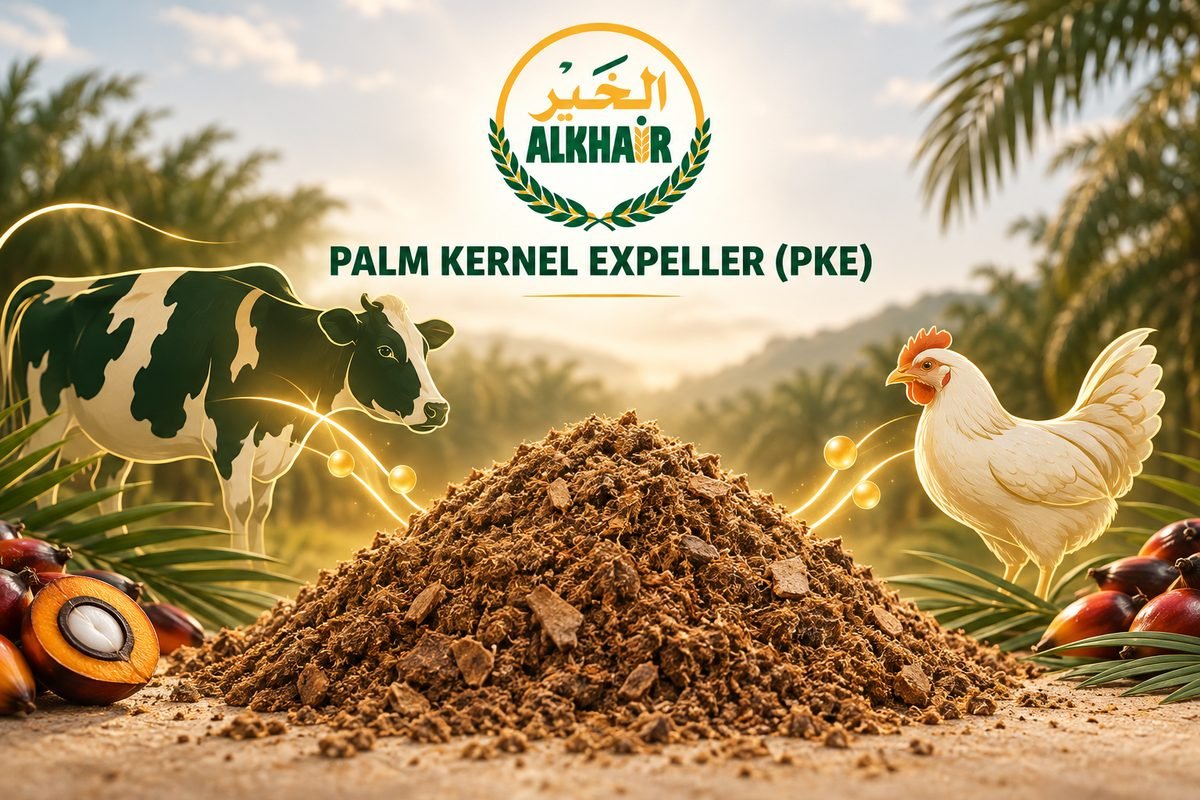
Palm kernel meal for dairy and beef cattle
Typical shares of palm kernel meal in beef and dairy rations, what to watch, and how to bring it in.
Read more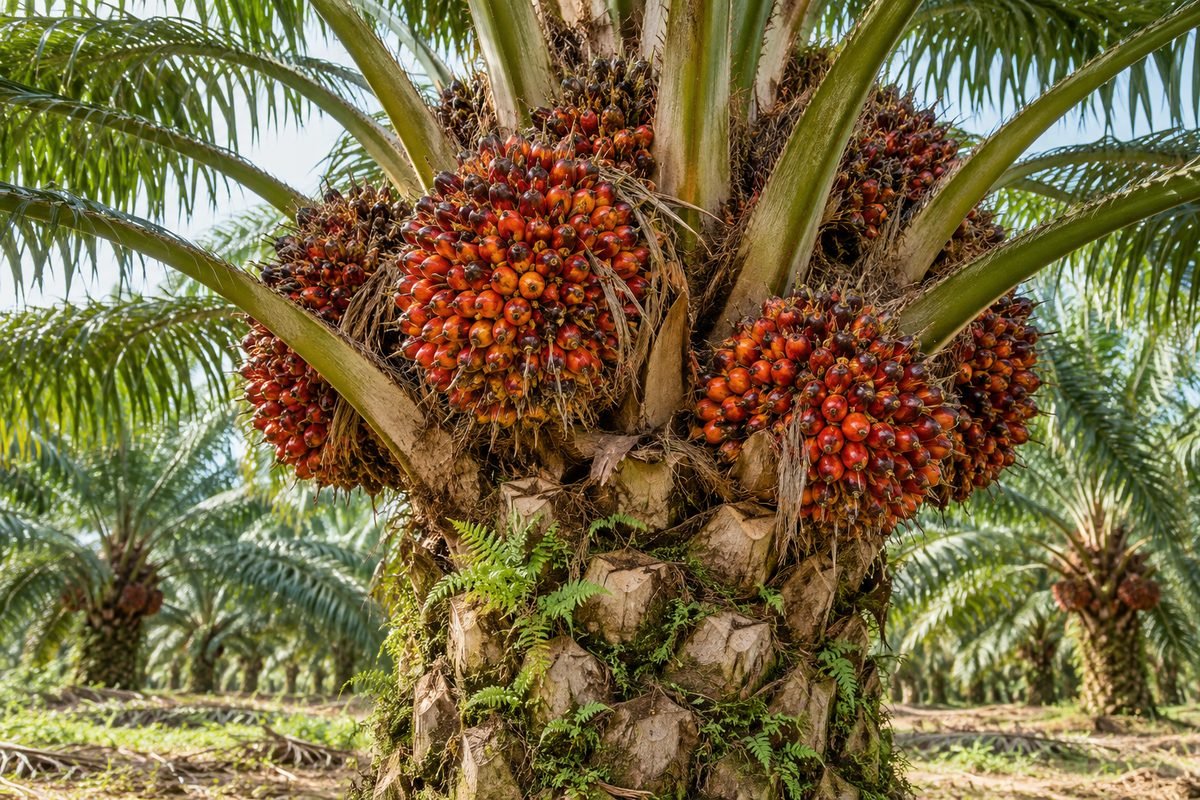
Palm kernel meal: what it is and how it is made
PKE, PKC or palm kernel meal: the same pressed by-product of the oil palm kernel. Where it comes from and what it brings to a ration.
Read moreRelated
Jute bags (made in Bangladesh)
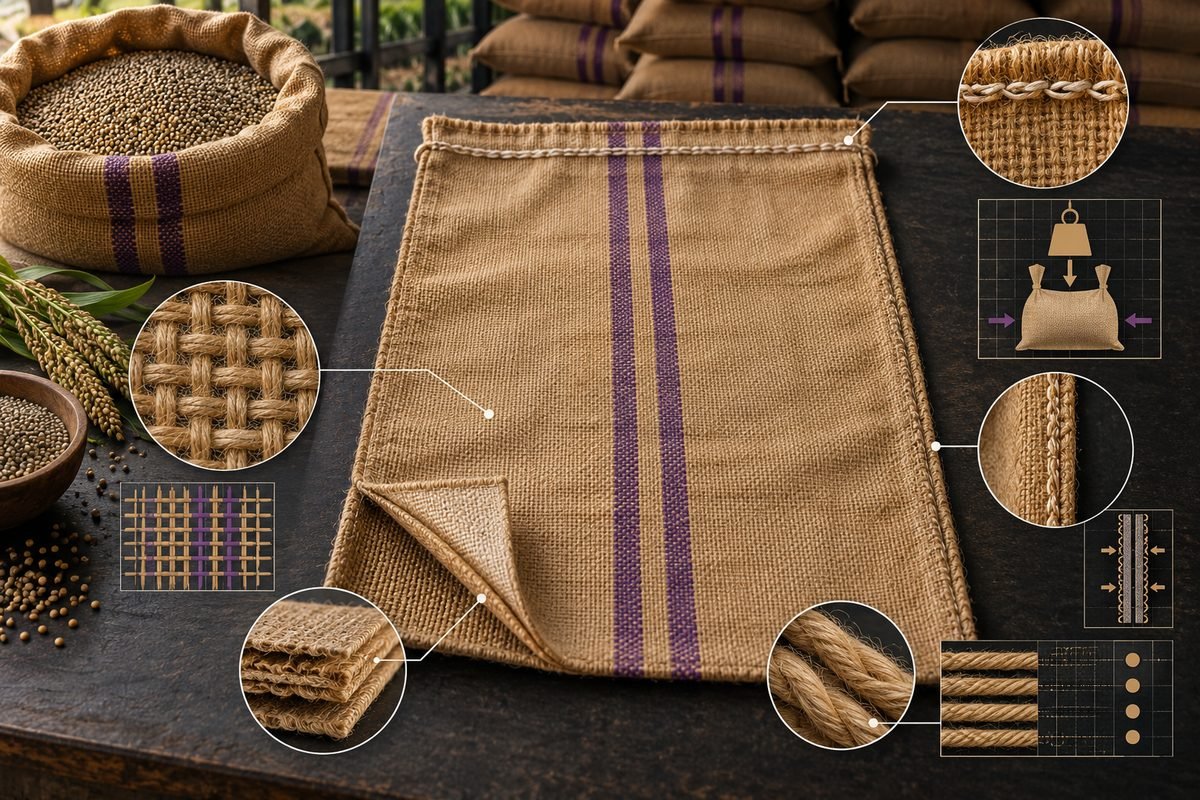
Al-Khair jute bags made in Bangladesh: checked, baled and ready to ship. Ask for a price.
View details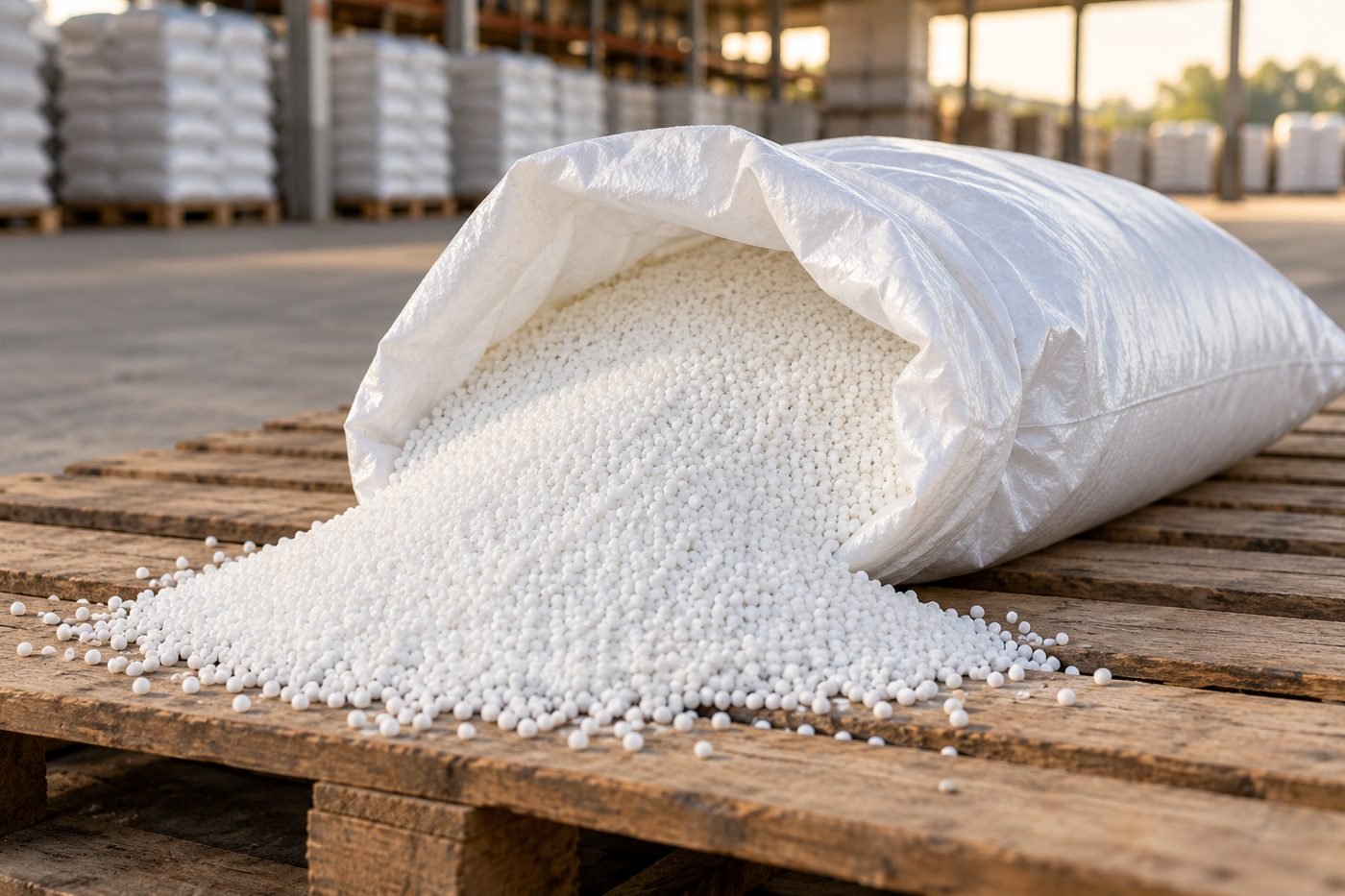
Urea (46% N)
The most widely used nitrogen fertilizer: 46% N for cereals, vegetables and fruit trees.
View details
DAP (18-46-0)
Phosphorus and nitrogen at planting: 18-46-0 for strong roots and early growth.
View details